
Hi! I’m Shuowen Li (李硕文), a third-year M.S. student in Optical Engineering at Tsinghua University. I also work as a research intern at the Academy of Arts & Design. Previously, I received my B.S. in Physics from Lanzhou University.
My research focuses on human–AI interaction, computer vision, computational design, and digital fabrication. I am interested in how intelligent systems can support and extend human creativity. I also explore how light-based technologies can enable novel interaction techniques and 3D experiences. By bridging engineering and art, I aim to develop interactive systems that empower people to create with AI across both digital and physical domains.
Check out my CV for more!
🧪 Projects
💡 Caustic Optical Design
Developing computational methods for caustic optical design, grounded in physics-based light transport, and exploring 3D-printing-aware fabrication to produce high-quality caustic projections. Building a designer-friendly workflow that unifies design, optimization, and manufacturing, enabling broader exploration of caustic design and new expressive uses of light in art and design.
🧬 Semantic-Guided Artificial Life System
Developed a real-time interactive system where users evolve digital lifeforms using natural language prompts. Integrated CLIP-based multimodal evaluation and CMA-ES optimization, supporting both semantic guidance and emergent swarm behaviors. Enables participatory generative design in the spirit of “evolving with intention”.
🐒 Houxi: Swarm Robotic Theater
Created a swarm-based storytelling system inspired by the Chinese fable “The Monkeys and the Moon”. Robots perform on a tabletop stage using path dynamics and spatial formations to convey plot and emotion. Dynamic projection enriches the narrative with vivid scenery and interactive visual cues.
🤖 PuppetLine: Swarm Robotic Storytelling
Built a tangible storytelling system using Toio robots and large language models (LLMs). Translates children’s narrative inputs into synchronized multi-robot actions and emotions. The system empowers co-creative expression through embodied interaction.
✋ Embo: A Wearable Robot for Empathy Education
Designed a wearable puppet robot that transforms verbal aggression into tactile pressure feedback, addressing bullying scenarios in child–robot interaction. Combines natural language analysis and haptic feedback to build emotional awareness.
🪞 Holographic Interaction System
Developed an interactive system that combines holographic 3D projection and hand-tracking sensors. Enables contactless, real-time interaction with floating 3D visuals through gesture recognition. Demonstrates the potential of holography in immersive and intuitive human–computer interfaces.
🖼️ 3D Display Quality Assessment
Proposed a hybrid evaluation framework for glasses-free 3D displays, integrating optical metrics and human visual comfort analysis. Contributed to drafting industry standards for autostereoscopic display technologies.
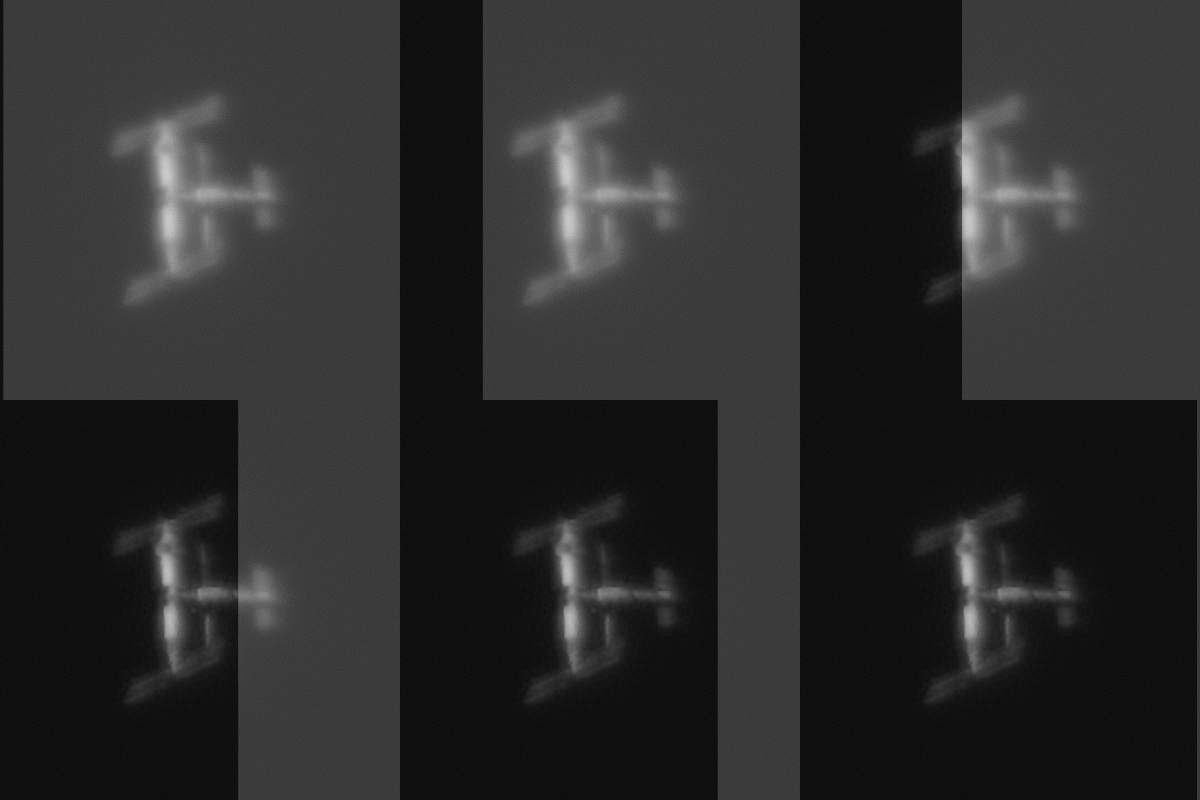
🌌 Astronomical Image Reconstruction
Developed a GPU-accelerated pipeline for turbulence removal in single-frame astronomical images using blind deconvolution, deformable convolution, and diffusion models. Collaborated on hardware–software co-design with a four-aperture telescope array.
📄 Publications
(* denotes equal contribution)
- Shuowen Li*, Kexin Wang*, Minglu Fang, Danqi Huang, Ali Asadipour, Haipeng Mi, Yitong Sun. Participatory Evolution of Artificial Life Systems via Semantic Feedback. In: SIGGRAPH Asia 2025 Art Papers.
- Ruhan Wang, Shuowen Li, Peiran Zhang, Danqi Huang, Yijie Guo, Haipeng Mi. From Text to Movement: LLM-driven Swarm User Interfaces for Embodied and Interactive Storytelling. In: ACM Conference on Intelligent User Interfaces (IUI) 2026.
- Ruhan Wang, Shuowen Li, Peiran Zhang, Danqi Huang, Yijie Guo, Haipeng Mi. PuppetLine: An Interactive System for Embodied Storytelling with LLM-driven Swarm Robots. In: Adjunct Proceedings of the 38th Annual ACM Symposium on User Interface Software and Technology (UIST), 2025.
- Shihan Qiu*, Yuhan Xie*, Shuowen Li*, Wei Guo, Xiaoyue Gao, Yijie Guo. Embo: A Wearable Robot Transforming Child-Directed Verbal Aggression into Tactile Feedback. In: ACM/IEEE International Conference on Human-Robot Interaction (HRI '24) Companion, 2024, pp. 857–861.
- Shuowen Li, Yunhui Gao, Jiachen Wu, Mingjie Wang, Zhangcheng Huang, Shumei Chen, Liangcai Cao. Lensless Camera: Unraveling the Breakthroughs and Prospects. Fundamental Research, 5(4), 2025, pp. 1725–1736, .
- Shuowen Li, Liangcai Cao. Multidimensional Crosstalk Analysis in Autostereoscopic Displays: Integrating Subjective and Objective Evaluations for Image Quality Assessment. Optics Express, 33(8), 2025, pp. 16911–16924, .
- Shuowen Li, Yunhui Gao, Jiachen Wu, Liangcai Cao. Blind Deblurring of Astronomical Images Using SCGTV-Based Single-Frame Method. Optics Express, 32(20), 2024, pp. 35579–35593, .
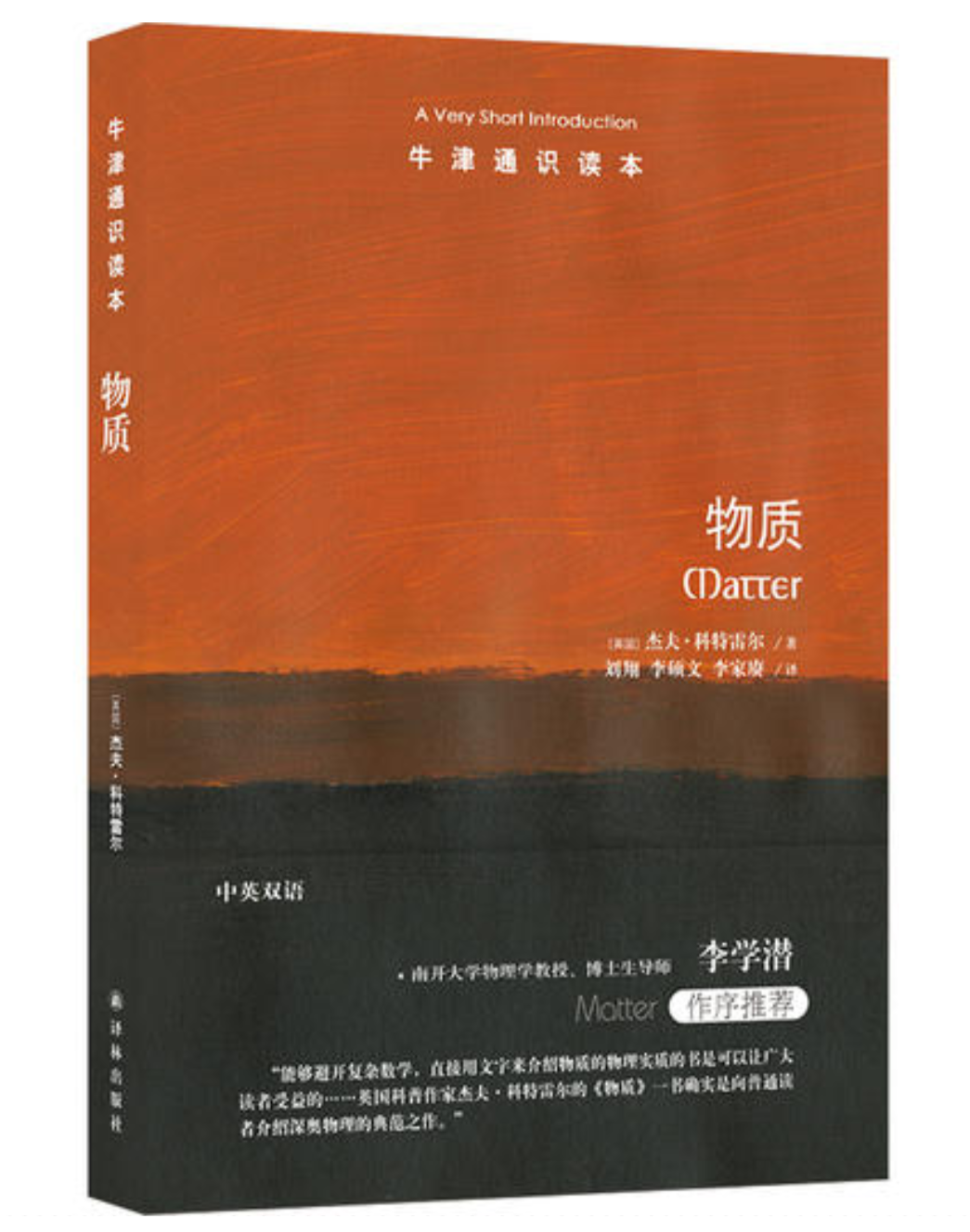
📘 Book Translation
Geoff Cottrell. Matter: A Very Short Introduction .
Translated by Xiang Liu, Shuowen Li, Jiageng Li.
Yilin Press, 2024. ISBN: 9787575301671.
A concise yet wide-ranging introduction to matter, guiding readers through its forms from fundamental particles to cosmic structures—with clarity and accessibility.
🛠️ Skills
- Programming: Python, MATLAB, Java, C++
- Softwares: Blender, Unity, SolidWorks, Arduino, Adobe Illustrator, Lumerical FDTD, Zemax
🔎 Research Interests
- Human–AI Co-Creation: Designing interactive systems that fuse generative AI with human intention, language, and emotion.
- Computational Design Tools: Building tools for evolving, simulating, and editing digital forms—across visual, spatial, and behavioral dimensions.
- Interactive 3D Technologies: Creating spatial computing and fabrication methods that connect digital content with the physical world.
- Creative Robotics & Embodied Interaction: Leveraging swarm behavior, wearable tech, and storytelling to create expressive physical interactions.
- Visual Perception & Evaluation: Studying how humans perceive 3D content, depth, and image quality, and modeling this in computational terms.